The Guardian5 June 2026Music, live performance and creative exports
Tyneside: musicians face lower EU work and tour earnings after Brexit
In Tyneside, music venues, promoters and independent performers are exposed to the same post-Brexit touring barriers described in Guardian reporting on UK musicians. The report found that more than a quarter of UK musicians had lost all EU work since 2021, nearly half had seen EU opportunities reduced, average tour earnings had fallen by 45%, and 59% said European touring was no longer viable. For a city or regional music economy, the mechanism is a loss of exportable live-work opportunities, fewer inbound and outbound tours, weaker collaboration and lower income for small artists and venues that depended on frictionless EU mobility.
The Guardian4 June 2026Steel / metal manufacturing exports
Hartlepool and Stockton-on-Tees: Steel / metal manufacturing exports Brexit exposure
Hartlepool and Stockton-on-Tees has steel, metals, machinery or heavy-manufacturing exposure that can be affected by the EU plan to reduce tariff-free steel import quotas. Guardian reporting described proposed quota reductions from July 2026 and warnings of a devastating impact on UK steel exports. For firms in Hartlepool and Stockton-on-Tees, the relevant channel is not only a tariff risk: customers using steel in automotive, machinery, construction materials and industrial components may face higher uncertainty over EU market access, order timing and whether UK supply can remain integrated into continental value chains.
Reuters1 June 2026chemicals, steel and process manufacturing
South Teesside: chemicals, steel and process manufacturing exposed to post-Brexit goods-trade frictions
In South Teesside (Teesside), chemicals, steel and process manufacturing face a Brexit-linked physical-goods trade problem. Reuters reported that UK manufacturers raised output prices at the fastest pace since June 2022 as input costs rose across chemicals, food, energy, fuels, plastics, metals, packaging, paper and timber, with firms citing supply-chain disruption, material shortages, tariffs, labour costs and taxes. The local exposure is through physical input costs and customer pricing: manufacturers using chemicals, packaging, metals, timber, plastics or energy face the same cost shock described in the PMI, with higher costs being passed through into finished goods and putting pressure on export competitiveness.
The Guardian31 May 2026Regional productivity, investment and labour-market performance
Tyneside: Brexit linked to weaker GDP, investment, employment and productivity
In Tyneside, the regional-prior layer treats productivity as a key route from Brexit exposure to living standards. Guardian reporting summarised research suggesting that UK GDP per head, investment, employment and productivity are lower than under a remain scenario, with business investment frozen by uncertainty and trade frictions. For local economies, this source family is best used as macro context: it helps interpret why regions with high trade exposure, high-value services or capital-intensive industries may show weaker output per worker after Brexit.
The Guardian28 May 2026Food, farming and seafood exports
Durham: Food, farming and seafood exports Brexit exposure
Durham has food, farming, seafood or rural supply-chain exposure that was sensitive to post-Brexit sanitary and phytosanitary paperwork. Guardian reporting on the UK-EU food export deal said paperwork and physical checks on dairy, fish, cheese, eggs and fresh red meat are expected to be removed from summer 2027, after certificates had previously cost up to £200 per consignment. For producers and exporters in Durham, the story captures how Brexit turned perishable goods into paperwork-intensive trade, raising fixed shipment costs and making smaller EU orders less attractive.
Reuters27 May 2026Automotive manufacturing / vehicle exports
Sunderland: Automotive manufacturing / vehicle exports Brexit impact
In Sunderland, the Nissan-led automotive cluster sits inside a UK vehicle-production environment where uncertainty over UK-EU trading arrangements still matters for investment and export planning. Reuters reported SMMT figures showing UK vehicle production falling in April 2026 and quoted the industry warning that high energy and material costs plus uncertainty over UK-EU trade relations continued to hamper growth. For Sunderland, the local economic risk is that vehicle manufacturing depends on EU access, component flows and eligibility under future European supply-chain rules; even modest policy uncertainty can affect production allocation, supplier confidence and export demand.
Reuters / Federation of Small Businesses5 May 2026SMEs / exporters
Hartlepool and Stockton-on-Tees: Brexit impact on SMEs / exporters
In Hartlepool and Stockton-on-Tees, small firms trading with the EU faced continuing post-Brexit pressure from red tape, rising costs and complex rules. Reuters reported Federation of Small Businesses research in May 2026 warning that small UK firms were being pushed out of EU markets as bureaucracy and operating costs made cross-border sales harder to sustain. The impact for local SMEs was a smaller reachable market: firms that had once treated nearby EU customers as ordinary export opportunities increasingly had to absorb customs administration, VAT complexity, delivery uncertainty and compliance work before a sale became worthwhile.
The Guardian5 March 2026Automotive manufacturing / electric vehicles
Sunderland Nissan plant exposed to EU industrial-policy exclusion
In Sunderland, Nissan’s car plant faced renewed Brexit-related market-access uncertainty when EU “Made in Europe” proposals threatened to exclude UK-made electric vehicles from subsidy-linked corporate fleet demand. Guardian reporting said the Sunderland site is Britain’s largest car factory, employs about 6,000 workers, and could face a systemic competitive disadvantage if UK vehicles are locked out of EU incentives. The local impact is a combination of export-market risk and investment uncertainty: a high-output manufacturing plant depends on access to European demand, and changed eligibility rules can affect future production volumes, supplier work and employment confidence.
Reuters19 February 2026Nissan and EV supply chains
Sunderland: Nissan and EV supply chains exposed to post-Brexit goods-trade frictions
In Sunderland (Sunderland), Nissan and EV supply chains face a Brexit-linked physical-goods trade problem. Reuters reported that the UK minister for EU relations warned that strict EU 'made in Europe' preference requirements could damage deeply integrated UK-EU supply chains, especially in strategic clean-energy and advanced-manufacturing sectors. The local exposure is that EU preference rules can treat UK-made components as outside the eligible European production base, weakening the economics of cross-border sourcing and making future investment depend on whether UK sites are recognised as part of European supply chains.
The Guardian19 February 2026Automotive and clean-tech supply chains
Sunderland automotive suppliers face risk from EU Made in Europe rules
For Sunderland's automotive supply chain, Guardian reporting on the EU's proposed 'Made in Europe' industrial strategy points to a new post-Brexit barrier: if European procurement or consumer incentives prioritise EU-made content, UK components and finished vehicles may become less attractive inside integrated supply chains. The concern is not a one-off border delay but a structural change in how cross-border manufacturing is valued, with possible cost increases and weaker market access for UK plants that remain physically linked to European production networks but legally outside the EU system.
The Guardian21 December 2025Steel, chemicals and manufacturing exports
South Teesside: Steel, chemicals and manufacturing exports Brexit impact
In South Teesside, where steel, chemicals and heavy manufacturing are central to the local industrial base, the EU carbon border adjustment mechanism creates another paperwork channel for exporters. The Guardian reported that UK exporters would face detailed carbon-emissions documentation on about £7bn of goods including steel, aluminium, car parts, cement, fertiliser and energy after the UK failed to secure an expected exemption. The local impact is a new compliance overhead layered onto existing Brexit trade frictions: firms must document embedded emissions through production chains before EU customers can accept goods without future tax risk.
British Chambers of Commerce1 December 2025Exporters
Hartlepool and Stockton-on-Tees: Brexit impact on Exporters
In Hartlepool and Stockton-on-Tees, exporters faced persistent Brexit trade friction well after the initial transition period. The British Chambers of Commerce reported in its EU reset work that around half of exporters were struggling with Brexit red tape and obstacles to trade. For local firms, the impact showed up as routine commercial drag: staff time was absorbed by paperwork, consignments required more checks, customers faced more uncertainty, and the EU became a harder market for smaller businesses to enter or maintain.
The Guardian21 November 2025Health services and skilled labour availability
Tyneside: health systems face loss of overseas-trained staff
In Tyneside, health-service labour availability matters for local productivity because untreated ill-health and staffing shortages feed back into workforce participation. Guardian reporting said 4,880 overseas-trained doctors left the UK in 2024, a 26% rise, while 42% of the UK medical workforce had qualified abroad. For regional health economies, the issue is that a less welcoming post-Brexit labour environment can reduce retention of skilled staff, worsening waiting times and constraining local labour-market participation.
The Guardian8 October 2025Steel / heavy manufacturing exports
South Teesside: Steel / heavy manufacturing exports Brexit evidence
In South Teesside’s steel and heavy-manufacturing economy, EU tariff and quota decisions are a direct market-access risk. Guardian reporting on proposed 50% EU steel tariffs said UK Steel described the move as an existential threat, noting that the EU took 78% of UK steel exports in 2024, equal to 1.9m tonnes. For Teesside producers and supply chains, the impact is the possibility that a major nearby market becomes commercially uncompetitive, weakening output, contracts and investment confidence in sectors already exposed to energy costs and green-transition pressures.
Financial Times28 July 2025chemicals, steel and machinery exports
South Teesside: chemicals, steel and machinery exports exposed to post-Brexit goods-trade frictions
In South Teesside (Teesside), chemicals, steel and machinery exports face a Brexit-linked physical-goods trade problem. The Financial Times reported that goods fell to a record-low share of UK exports, with declines in cars, chemicals and machinery and analysis attributing manufacturing weakness in large part to Brexit-related trade frictions. The local exposure is through a national goods-export downturn that falls most heavily on places with cars, chemicals, machinery, aerospace or port-linked goods trade; lower goods-export volumes weaken demand for local manufacturing and logistics capacity.
The Guardian4 July 2025Chemicals / steel / energy-intensive manufacturing
Hartlepool and Stockton-on-Tees: Chemicals / steel / energy-intensive manufacturing Brexit/data/regulatory exposure
In Hartlepool and Stockton-on-Tees, Guardian reporting described Teesside’s historic dependence on ICI, Billingham, Wilton and the wider chemicals and steel-processing cluster. The article reported fears around Sabic’s Olefins 6 plant at Wilton and the earlier closure of CF Industries’ ammonia plant at Billingham, with almost 40 jobs lost there. While the immediate pressure came from energy and carbon costs, the local evidence matters for Brexit-era industrial policy because chemicals firms also face UK-EU regulatory and trade separation. For the local economy, a weakening chemicals base means fewer skilled industrial jobs, fewer supplier contracts and less resilience in a region already exposed to deindustrialisation.
Reuters1 June 2025steel, chemicals and energy-intensive manufacturing
South Teesside: steel, chemicals and energy-intensive manufacturing exposed to post-Brexit goods-trade frictions
In South Teesside (South Teesside), steel, chemicals and energy-intensive manufacturing face a Brexit-linked physical-goods trade problem. Reuters reported Make UK warning that UK industrial energy prices are exceptionally high, with manufacturing already hit by Brexit, energy costs and global trade tensions; Nissan said its Sunderland plant had the highest energy costs of its global sites. The local exposure is through energy-intensive production: Brexit-related trade friction sits alongside industrial energy costs, so manufacturers face a compound competitiveness problem when bidding for export contracts or attracting new investment.
Reuters17 April 2025Chemicals / process manufacturing / EU regulation
South Teesside: Chemicals / process manufacturing / EU regulation Brexit evidence
In Teesside’s chemical and process-industry cluster, regulatory divergence and EU compliance costs shape the economics of serving European markets. Reuters reported that the European Chemical Industry Council estimated EU environmental regulation was costing chemical firms more than $20bn annually, with firms reassessing European footprints amid high input costs and regulatory pressure. For UK chemical exporters outside the EU regulatory system, the impact is a more complex compliance environment: firms must track rules, carbon and chemical restrictions, and market-access requirements while competing with producers already inside the EU framework.
The Times1 February 2025Cheese, dairy and speciality food exports
Durham: Cheese, dairy and speciality food exports Brexit exposure
Durham has dairy, speciality food or small-batch food export exposure. Times reporting on cheese exporters described post-Brexit forms, veterinary checks, health certificates and border inspections that made EU trade take three times as long and cost three times as much for some firms. For small producers in Durham, the mechanism is scale: the same certificate and clearance charges apply even to low-volume consignments, so direct EU sales can disappear unless firms use intermediaries or consolidate shipments.
British Chambers of Commerce30 January 2025Exporters
Hartlepool and Stockton-on-Tees: Brexit impact on Exporters
In Hartlepool and Stockton-on-Tees, exporters faced a weak growth payoff from the post-Brexit trading settlement. The British Chambers of Commerce reported in January 2025 that 41% of exporters disagreed that the Brexit deal was helping them grow sales, while only 14% agreed. The impact was felt through sales pipelines and confidence: firms trying to sell into EU markets faced paperwork, checks and rules that made growth harder, leaving local exporters with higher transaction costs and fewer easy routes to expand beyond the domestic market.
The Guardian23 January 2025Chemicals, food and manufacturing supply chains
Teesside chemical and manufacturing supply chains could benefit from PEM-style cumulation
For Hartlepool and Stockton-on-Tees, Guardian reporting on the Pan-Euro-Mediterranean customs area is relevant to chemical and food-processing supply chains that use cross-border inputs. The article explains that UK firms outside PEM face tighter limits on whether products count as domestic for preferential trade. It specifically notes that manufacturing sectors with broad supply chains, including cars, chemicals and food, could benefit from easier cumulation. For Teesside producers, the issue is that post-Brexit origin rules can make imported inputs administratively costly even when the finished product is made locally.
Reuters16 January 2025Automotive manufacturing / EV supply chain
Sunderland EV supply chain localises powertrain inputs after post-Brexit industrial uncertainty
In Sunderland, Reuters reported that JATCO would build a new UK factory to supply up to 340,000 electric-vehicle powertrains a year to Nissan's Sunderland plant from 2026, with a £48.7m facility and up to 183 jobs. The source is not framed only as a Brexit story, but it is highly relevant to the post-Brexit supply-chain adjustment problem: Nissan's UK production needs nearby, rules-compliant and cost-efficient inputs as the sector faces EU market access, EV-content, and origin-rule pressures. The local impact is a move to rebuild supply-chain depth around the plant rather than rely on longer international component flows.
Vogue Business1 January 2025Textile and apparel manufacturing
Tyneside: Textile and apparel manufacturing Brexit exposure
Tyneside has textile, apparel, garment-finishing or fashion-manufacturing exposure. Vogue Business reported that Brexit ended frictionless trade for UK manufacturers, increasing customs delays and costs while weakening exports to the EU; Patrick Grant of Community Clothing described Brexit as a disaster for manufacturing because it made buying from and selling into Europe harder. For producers in Tyneside, the local mechanism is supply-chain thinning: if small dye houses, cutters, mills or component suppliers close or lose EU orders, the whole local manufacturing ecosystem becomes less resilient.
Financial Times1 November 2024Chemicals / UK REACH / process manufacturing
South Teesside: Chemicals / UK REACH / process manufacturing Brexit/data/regulatory exposure
In South Teesside, the chemical cluster is exposed to the post-Brexit split between EU REACH and the still-unsettled UK REACH regime. Financial Times reporting on the chemicals sector described SMEs facing dual regulatory regimes, customs frictions and logistics costs, while the industry continued waiting for clarity on domestic chemical regulation. For a Teesside process-manufacturing area, the impact is not just paperwork at the border: the sector depends on being able to register, test, store and move chemicals across UK-EU supply chains. Regulatory duplication raises compliance costs, ties up stock and cash, and weakens the case for investment in plants that serve both domestic and European customers.
Reuters16 October 2024Financial services, insurance and data analysis
Tyneside: financial services lose jobs and EU-facing activity after Brexit
In Tyneside, finance and business-service clusters are affected by the post-Brexit relocation and market-access dynamics described by Reuters. The City of London’s Lord Mayor said Brexit had cost about 40,000 finance jobs, with activity absorbed by Dublin, Milan, Paris and Amsterdam, while financial output had weakened relative to other European economies. For regional financial centres, the mechanism is a loss of EU-facing mandates, fewer high-productivity jobs and lower tax/productivity spillovers from financial services.
Financial Times26 September 2024Freeports / customs-site manufacturing and logistics
Teesside freeport customs-site uptake raises questions over post-Brexit trade-policy offset
In South Teesside, the post-Brexit freeport model was meant to create a customs advantage for manufacturing, processing and logistics around Teesworks and Teesport. Financial Times reporting on HMRC figures found that only six businesses were using customs sites across eight English freeports more than three years after the scheme was launched. For Teesside, this complicates the local industrial-policy story: the freeport may still support land development and investment, but the specific customs-site mechanism appears to have had limited take-up. The economic channel is a muted policy offset: firms facing Brexit trade frictions have not widely adopted the customs treatment that was presented as part of the post-Brexit regional growth offer.
Reuters11 September 2024Manufacturing productivity and regional industrial structure
Hartlepool and Stockton-on-Tees: manufacturing share falls as services dominate UK output
In Hartlepool and Stockton-on-Tees, manufacturing exposure is tied to regional productivity because factory activity supports supply chains, skilled jobs and export capacity. Reuters reported that UK manufacturing’s share of output had fallen to 9.2%, while services had reached 81.2%, with Brexit and London-centric growth contributing to the changing trade mix. For manufacturing regions, the concern is that non-tariff barriers and investment uncertainty make it harder for local factories to remain integrated into European supply chains, even where demand exists.
Reuters / Make UK16 June 2024Manufacturing / exporters
South Teesside: Manufacturing / exporters — UK industry wants better strategy and EU ties from next government, Ma
In Teesside, manufacturers seeking clearer EU trade relations face the Brexit-related pressure described in Reuters / Make UK reporting on manufacturing / exporters. The source records Make UK survey: 69% wanted a credible industrial strategy and 54% wanted enhanced EU trade ties. For South Teesside, the local economic impact is that firms with EU customers or cross-border supply chains must absorb extra administration, delays, compliance work or route uncertainty before output reaches its market. This changes margins, customer reliability and investment incentives, particularly for smaller firms without large customs, logistics or regulatory teams.
The Guardian25 October 2023Nissan and battery-sourcing rules
Sunderland: Nissan and battery-sourcing rules exposed to post-Brexit goods-trade frictions
In Sunderland (Sunderland), Nissan and battery-sourcing rules face a Brexit-linked physical-goods trade problem. The Guardian reported that European carmakers, including firms with UK plants such as Toyota, Ford and Jaguar Land Rover, urged a delay to post-Brexit electric-vehicle rules of origin that would otherwise trigger 10% tariffs if battery sourcing thresholds were not met. The local exposure is that rules-of-origin thresholds can convert battery and component sourcing into a tariff risk, changing whether UK-assembled vehicles or parts qualify for tariff-free access to EU markets.
Insider Media North East25 May 2022Manufacturing, distribution and food processing
Hartlepool and Stockton-on-Tees: exporters, distributors and food processors changing stock location and distribution aft
In Hartlepool and Stockton-on-Tees, reporting by Insider Media North East around North East owner-managed firms gives a localised account of Brexit's effect on manufacturing, distribution and food processing. The source describes exporters, distributors and food processors changing stock location and distribution after Brexit. The local economic impact is that firms or supply-chain actors face additional checks, documentation, routing decisions or labour and cost pressures before goods can reach customers, reducing margins and making smaller consignments or time-sensitive shipments less viable.
The Guardian3 February 2021Textiles / reuse exports
Hartlepool and Stockton-on-Tees: Brexit impact on Textiles / reuse exports
In Hartlepool and Stockton-on-Tees, reuse, textiles and low-margin exporters faced severe post-Brexit disruption when paperwork and rules-of-origin checks interrupted EU shipments. Guardian reporting on ECS Textiles in North Shields described second-hand clothing exports piling up after Brexit halted sales to EU customers. The impact was immediate cash-flow and storage pressure: goods that would normally have moved quickly into European markets stayed in warehouses, while firms had to navigate border delays, customs documents and uncertainty over whether used goods qualified for tariff-free movement.
Pitchfork22 January 2021Music touring, festivals and small venues
Tyneside: touring crisis raises costs for small artists and venues
In Tyneside, small venues and emerging artists are exposed to the touring frictions described by Pitchfork after the UK left the EU. Visa uncertainty, work-permit rules, carnets and transport restrictions raised the fixed cost of touring Europe, which matters most for smaller artists whose margins are thin. The local economic effect is lower export reach for performers, fewer reciprocal European tours, and reduced work for venues, crews and promoters who rely on a steady flow of touring activity.
ITV News Border18 January 2021Seafood haulage and exports
Northumberland: seafood hauliers protesting over EU shipment delays and lost confidence
In Northumberland, reporting by ITV News Border around Eyemouth / Borders seafood lorries gives a localised account of Brexit's effect on seafood haulage and exports. The source describes seafood hauliers protesting over EU shipment delays and lost confidence. The local economic impact is that firms or supply-chain actors face additional checks, documentation, routing decisions or labour and cost pressures before goods can reach customers, reducing margins and making smaller consignments or time-sensitive shipments less viable.
The Guardian3 June 2020Automotive manufacturing / exports
Sunderland car exports exposed to tariff and regulatory-risk channel
In Sunderland, Nissan warned that a no-deal Brexit could make the local plant unsustainable because of tariffs, efficiency losses and regulatory divergence. Guardian reporting stated that about 70% of the cars produced in Sunderland were sold in the EU and that a 10% tariff would restrict profitability. The impact for the city’s automotive economy was not limited to one firm’s margin: the plant sits at the centre of a large supplier and employment network, so reduced EU access would weaken output expectations, investment decisions and demand for local supply-chain services.
The New Yorker30 September 2019Local economy / deprivation context
Hartlepool Brexit support sits alongside long-term industrial decline and deprivation
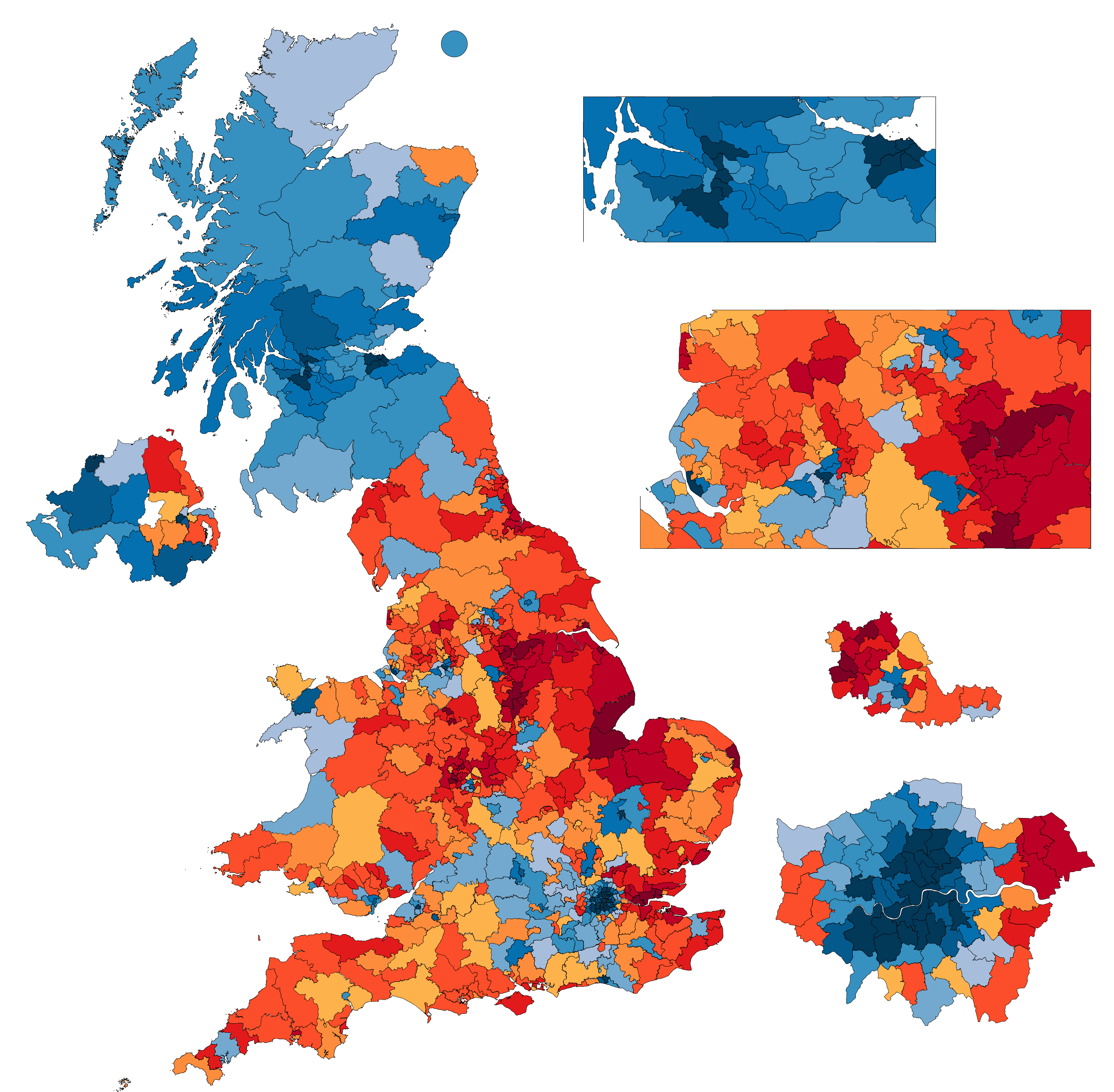
In Hartlepool, the Brexit vote was embedded in a local economy shaped by industrial decline, austerity and deprivation. The New Yorker reported that Hartlepool voted 69% to leave the EU and described a coastal town where older heavy industry and factory work had continued to decline, while income and employment deprivation remained severe. For the evidence pack this is not a firm-level trade shock; it is a locality-specific baseline story about expectations, political economy and vulnerability. Brexit narratives in Hartlepool interacted with long-running labour-market weakness and a search for renewed industrial opportunity.
Axios3 February 2019Automotive manufacturing
Nissan decision not to build SUV in Sunderland linked to Brexit uncertainty
In Sunderland, Axios reported that Nissan said it would build a new SUV model in Japan rather than at its northern England factory, citing Brexit uncertainty. The story matters for local manufacturing because the lost production plan meant expected activity and jobs did not materialise around the Sunderland automotive cluster. The channel is investment wait-and-see combined with market-access uncertainty: when a plant depends on EU-facing supply chains and export markets, unresolved trade rules can change model-allocation decisions before production ever begins.
News and StarDate unavailableAgriculture, food processing and rural labour
Northumberland: local press source candidate on Agriculture, food processing and rural labour
For Northumberland/Cumbria-border rural economies, the News and Star target-domain search family is a candidate route for local reporting on farmers, labour shortages and post-Brexit food-export frictions. It is included in the audit layer to guide follow-up retrieval, not as final public evidence, because the built-in web search could not recover a stable exact article with title and date from the target domain.